
Graphic design and photography are closely interconnected disciplines that work together to create effective visual…

Artificial Intelligence and the Future of Design: Where Technology Meets Human Creativity
Artificial intelligence is changing how designers work, but the future of creativity may depend less on what machines can generate and more on what humans choose to create.
Introduction: A New Era of Creative Possibilities
For centuries, design has evolved alongside technology. From traditional drawing instruments and mechanical printing presses to digital illustration and computer-aided design, each technological advancement has expanded the possibilities of visual expression. Today, artificial intelligence (AI) represents another significant development, introducing tools capable of generating images, suggesting layouts, producing design variations, and assisting with creative decisions.
Generative AI systems can produce visual and textual content from prompts, allowing designers to explore ideas and experiment with different approaches. However, these capabilities also raise questions about originality, authorship, professional judgment, and the future of creative work.
Research suggests that AI can improve productivity in certain professional tasks. Noy and Zhang (2023), for example, found that generative AI substantially increased efficiency and output quality in an experiment involving professional writing. Although their study did not specifically examine graphic design, it demonstrates how AI assistance can transform aspects of knowledge-intensive work. Science
The central question is therefore not simply whether AI can create designs. It is how designers can use AI effectively while preserving the human creativity, intention, and critical judgment that make design meaningful.
AI as a Creative Partner, Not a Replacement
Traditional graphic design involves a combination of research, conceptualization, visual experimentation, technical execution, and evaluation. Designers must understand the intended audience, identify communication objectives, and translate abstract ideas into visual messages.
Artificial intelligence can assist with several stages of this process.
For example, a designer developing a brand identity may use AI to brainstorm visual concepts, explore color combinations, and produce preliminary compositions. These outputs can then serve as references for further refinement using professional design applications.
The advantage lies in expanding the number of possibilities a designer can investigate before committing to a final direction.
However, AI-generated results are not necessarily appropriate, original, accurate, or aligned with a client’s identity. A design may appear visually attractive yet fail to communicate the intended message.
Dell’Acqua et al. (2026) describe AI capabilities as a jagged technological frontier, meaning that the technology improves performance in some tasks while potentially reducing it in others. Their research highlights the importance of understanding when AI assistance is beneficial and when human expertise remains essential. Organization Science
For graphic designers, this distinction is particularly important. AI may help generate alternatives, but evaluating composition, symbolism, cultural relevance, accessibility, and visual communication remains a professional responsibility.
How Artificial Intelligence Is Transforming Graphic Design
AI is influencing several aspects of contemporary design practice.
1. Faster Concept Development
Creative professionals frequently begin projects by exploring multiple directions before developing a final composition.
AI-assisted systems can accelerate this exploratory stage by generating mood boards, suggesting visual treatments, and presenting alternative compositions.
Instead of manually producing every preliminary concept, designers can use generated references to compare stylistic possibilities and identify promising directions.
This does not eliminate the need for creative thinking. Rather, it changes where designers concentrate their effort: from producing every initial variation to interpreting, selecting, and refining the most appropriate ideas.
Research by Noy and Zhang (2023) suggests that generative AI can redistribute professional effort toward activities such as editing and evaluating outputs, although their evidence comes from writing rather than visual design.
2. Image Creation and Digital Manipulation
AI-assisted image generation and editing have introduced new approaches to producing visual content.
Designers can use such technologies to develop conceptual illustrations, prototype advertising imagery, extend backgrounds, remove distractions, and test visual treatments.
These capabilities are especially useful during early-stage development when producing a fully polished composition may be unnecessary.
Nevertheless, AI-generated imagery should be evaluated carefully before publication. Problems involving visual inconsistencies, inaccurate details, representational bias, or misleading content may not be immediately apparent.
The technology can reduce repetitive work, but it cannot automatically guarantee the quality or integrity of a finished design.
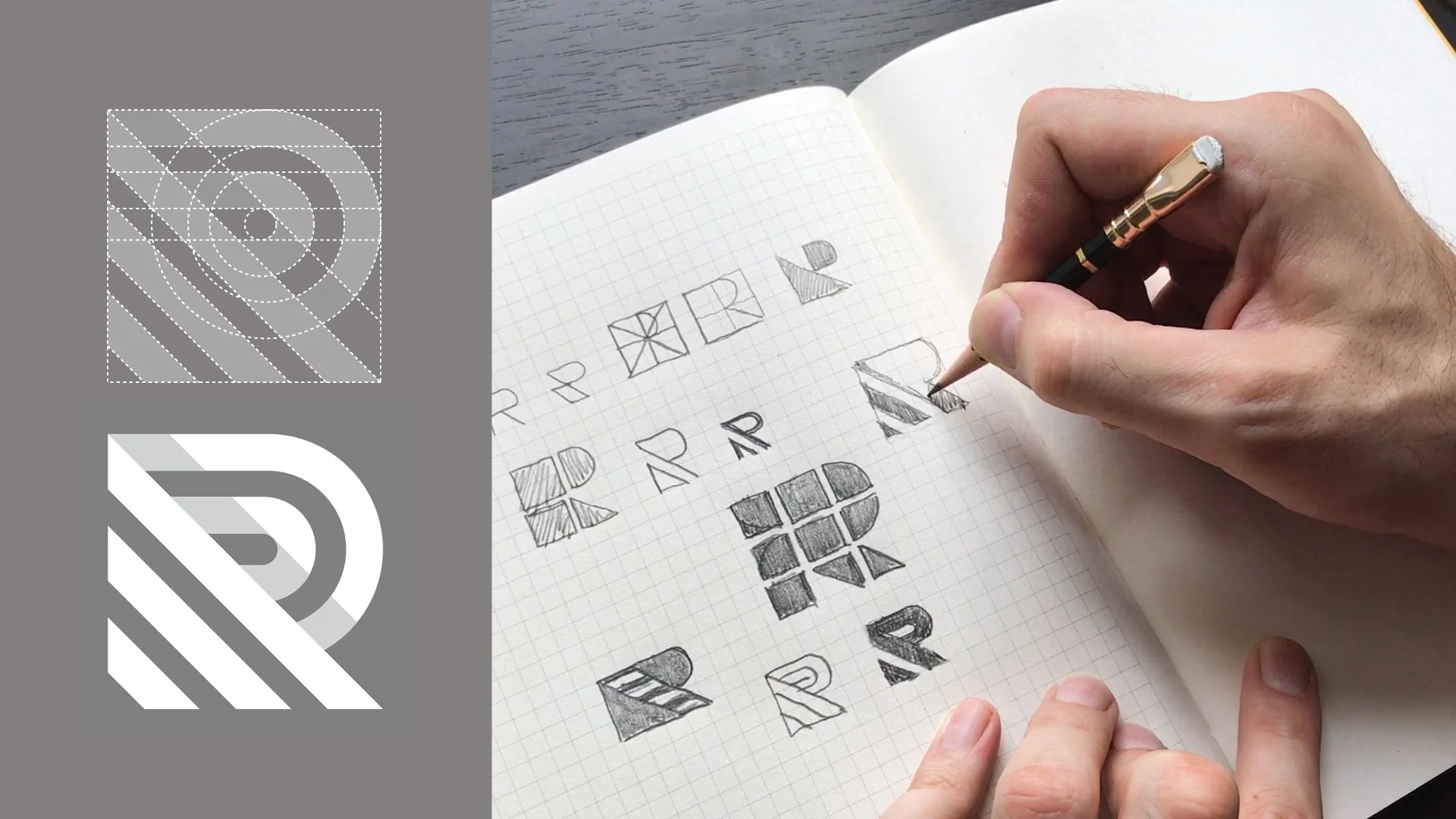
3. Visual Identity and Brand Development
Brand design requires much more than an attractive logo.
A recognizable visual identity involves consistent typography, colors, imagery, proportions, and communication standards. More importantly, these elements must reflect the organization’s personality, objectives, and intended audience.
AI can support the development of branding concepts by providing visual references and alternative treatments. However, final branding decisions require an understanding of the organization’s positioning and identity.
An AI-generated logo, for example, may look professionally executed but resemble existing visual identities or fail to reproduce effectively at small sizes.
For this reason, professional designers should treat AI-generated branding concepts as starting points rather than automatically accepting them as finished deliverables.
4. Improving Workflow Efficiency
Design projects often involve repetitive activities, including preparing variations, adjusting compositions, organizing assets, and developing content for different formats.
AI assistance can reduce some of this workload, potentially creating more opportunities for strategic planning and creative evaluation.
In an experimental study of 758 knowledge workers, Dell’Acqua et al. (2026) found that participants using AI completed certain tasks more quickly and produced higher-quality solutions when the tasks fell within the technology’s capabilities.
These findings should not be interpreted as guaranteed productivity improvements for every graphic design workflow. They instead reinforce a practical principle: AI delivers the greatest value when its capabilities match the task and its output is subject to informed human evaluation. Organization Science
The Ethical Challenge: Originality, Ownership, and Responsibility
As AI-generated content becomes more common, designers must confront important ethical and legal questions.
One of the most significant concerns involves authorship and copyright.
The U.S. Copyright Office (2025) explains that AI-assisted works may qualify for copyright protection when a human author contributes sufficient original expressive elements. Merely providing prompts, however, does not necessarily establish copyrightable human authorship under U.S. law. The NewsMarket
This distinction emphasizes the importance of meaningful human creative involvement. It also illustrates why designers should not assume that every AI-generated image can be protected or commercially used without further legal consideration. Copyright requirements vary by jurisdiction, including in the Philippines.
Other ethical considerations include the responsible use of training data, protection of confidential client materials, disclosure of AI-generated content when appropriate, and the prevention of misleading imagery.
The United Nations Educational, Scientific and Cultural Organization (UNESCO) advocates a human-centered approach to generative AI, emphasizing ethical safeguards, data privacy, and responsible implementation (Miao & Holmes, 2023). UNESCO
For creative professionals, responsible AI adoption therefore requires more than technical proficiency. It demands transparency, accountability, and respect for intellectual property and human expression.
Why Human Creativity Still Matters
AI can identify patterns, produce variations, and generate compositions based on learned relationships within data. Yet effective design is not simply a matter of combining visually appealing elements.
A successful design must communicate a purpose.
It may need to express trust, evoke emotion, convey institutional values, preserve cultural identity, or motivate an audience to act. Achieving these objectives requires contextual understanding and deliberate choices.
Consider a poster promoting a local cultural celebration. AI may generate an attractive layout, but the designer must still determine whether the symbols are culturally appropriate, whether the language communicates correctly, and whether the composition represents the community respectfully.
Human creativity remains important because design involves interpretation, empathy, intention, and responsibility.
The goal should not be to compete with AI in generating the greatest number of images. Instead, designers can concentrate on producing visual communication that is purposeful, distinctive, and meaningful.
The Future of Design Is Human–AI Collaboration
The continuing development of generative AI suggests that creative professionals will increasingly need both traditional design competencies and technological literacy.
Knowledge of typography, composition, color theory, visual hierarchy, image manipulation, and design principles remains fundamental. AI tools may change the production process, but they do not eliminate the need to understand why a particular visual solution works.
Future-ready designers will benefit from learning how to formulate clear instructions for AI systems, critically assess generated outputs, integrate those outputs into professional workflows, and recognize situations in which the technology should not be used.
UNESCO’s guidance on generative AI emphasizes the importance of developing human capabilities alongside technological adoption (Miao & Holmes, 2023). This principle is equally relevant to the creative industries.
Design education, therefore, should teach students not only how to use AI but also how to question its outputs, defend their design decisions, and maintain professional standards.
Conclusion: Technology Expands Possibilities; Creativity Gives Them Meaning
Artificial intelligence is transforming the tools and processes of graphic design. It offers opportunities to accelerate experimentation, support production, and explore new forms of visual expression.
Yet the availability of powerful technology does not automatically produce meaningful design.
Professional creativity still depends on human judgment: understanding the problem, recognizing the audience, selecting appropriate visual elements, and communicating with clarity and purpose.
The future of design is not necessarily a choice between human creativity and artificial intelligence. It is an opportunity to combine technological capabilities with thoughtful artistic direction.
AI can help us create more possibilities. Human creativity determines which possibilities are worth pursuing.
References
Dell’Acqua, F., McFowland, E., III, Mollick, E., Lifshitz, H., Kellogg, K. C., Rajendran, S., Krayer, L., Candelon, F., & Lakhani, K. R. (2026). Navigating the jagged technological frontier: Field experimental evidence of the effects of artificial intelligence on knowledge worker productivity and quality. Organization Science, 37(2), 403–423. https://doi.org/10.1287/orsc.2025.21838
Miao, F., & Holmes, W. (2023). Guidance for generative AI in education and research. UNESCO. https://www.unesco.org/en/articles/guidance-generative-ai-education-and-research
Noy, S., & Zhang, W. (2023). Experimental evidence on the productivity effects of generative artificial intelligence. Science, 381(6654), 187–192. https://doi.org/10.1126/science.adh2586
U.S. Copyright Office. (2025). Copyright and artificial intelligence, part 2: Copyrightability. https://www.copyright.gov/ai/Copyright-and-Artificial-Intelligence-Part-2-Copyrightability-Report.pdf

Related Posts


This Post Has 0 Comments