
Graphic design and photography are closely interconnected disciplines that work together to create effective visual…
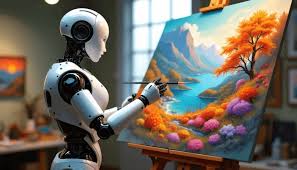
AI and the Future of Visual Creativity
Artificial Intelligence (AI) is rapidly transforming the landscape of visual creativity. From generating images and assisting in layout design to enhancing photo editing and automating repetitive tasks, AI is becoming an integral part of modern visual arts and graphic design. Rather than replacing human creativity, AI expands the designer’s capabilities by providing new tools for ideation, experimentation, and production. The future of visual creativity lies in the collaboration between human intelligence and machine intelligence, combining artistic intuition with computational power (McCosker & Wilken, 2020; Manovich, 2019).
AI represents not the end of creativity, but its technological evolution.
Understanding Artificial Intelligence in Visual Design
Artificial Intelligence refers to computer systems capable of performing tasks that normally require human intelligence, such as pattern recognition, learning, and decision-making (Russell & Norvig, 2021).
In visual design, AI can:
- Generate images
- Enhance photographs
- Suggest layouts
- Automate design processes
AI systems analyze large amounts of visual data and learn patterns, allowing them to produce new visual outputs.
AI enhances creative efficiency.
Technology supports creative exploration.
AI extends human creative potential.
AI as a Creative Tool, Not a Replacement
AI does not replace human creativity. Instead, it functions as a tool that assists designers in the creative process. Human designers provide intent, judgment, and meaning, while AI provides computational support (McCosker & Wilken, 2020).
Designers remain responsible for:
- Concept development
- Creative direction
- Cultural interpretation
- Ethical decisions
AI assists with execution and experimentation.
Creativity remains fundamentally human.
AI enhances creative productivity.
Human creativity guides technology.
AI and Generative Visual Design
Generative AI can create original images based on learned visual patterns. These systems use machine learning models trained on large image datasets (Goodfellow et al., 2014).
Generative AI enables designers to:
- Explore visual concepts quickly
- Generate variations
- Experiment with styles
This accelerates the creative process.
AI expands creative possibilities.
Generative systems enhance visual ideation.
Technology supports visual exploration.
AI and Image Enhancement
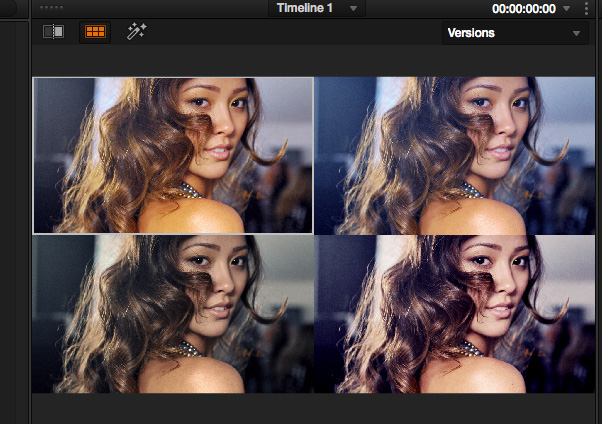
AI-powered tools enhance image quality and automate editing tasks. These tools can adjust color, lighting, contrast, and sharpness automatically (Manovich, 2019).
AI improves:
- Photo quality
- Image clarity
- Visual detail
AI enhances efficiency and consistency.
Technology improves visual precision.
AI supports technical execution.
Designers gain greater creative control.
AI and Automation in Design Workflows
AI automates repetitive design tasks, allowing designers to focus on conceptual and creative work. Automation improves productivity and efficiency (Russell & Norvig, 2021).
AI automates tasks such as:
- Background removal
- Image resizing
- Layout alignment
Automation reduces manual labor.
Designers focus on creativity.
AI enhances workflow efficiency.
Technology supports design productivity.
AI and Creative Collaboration
AI enables new forms of creative collaboration between humans and machines. Designers can interact with AI systems to explore visual ideas and refine concepts (McCosker & Wilken, 2020).
This collaboration combines:
- Human creativity
- Machine efficiency
AI provides options, while designers make creative decisions.
Collaboration enhances creative outcomes.
Human creativity remains essential.
AI supports creative partnership.
Design becomes human-machine collaboration.
AI and Personalization in Visual Communication
AI allows designers to create personalized visual experiences. AI systems analyze user data and generate customized visual content (Manovich, 2019).
Personalization improves:
- User engagement
- Communication effectiveness
AI enables adaptive visual communication.
Technology enhances audience connection.
AI improves communication relevance.
Design becomes responsive.
Visual communication becomes personalized.
AI and the Expansion of Creative Possibilities
AI expands the boundaries of visual creativity by enabling new forms of artistic expression. Designers can explore styles, compositions, and visual concepts that were previously difficult or time-consuming to create (Goodfellow et al., 2014).
AI enhances creative experimentation.
Technology expands artistic potential.
Design becomes more exploratory.
AI supports creative innovation.
Creativity evolves with technology.
Ethical Considerations in AI-Assisted Creativity
The use of AI in visual creativity raises ethical considerations. Designers must consider issues such as authorship, originality, and responsible use (Floridi et al., 2018).
Ethical design requires:
- Responsible AI use
- Respect for originality
- Cultural sensitivity
Designers remain responsible for creative decisions.
Ethics guide technological use.
AI requires human oversight.
Responsible design ensures integrity.
Ethics remain essential.
AI and the Democratization of Visual Creativity
AI makes visual creation more accessible to a wider audience. Individuals without formal design training can use AI tools to create visual content (Manovich, 2019).
This democratization increases:
- Creative participation
- Visual communication accessibility
AI expands creative opportunity.
Technology empowers creators.
Visual creativity becomes more inclusive.
AI increases creative access.
Design becomes more accessible.
AI and the Future Role of Graphic Designers
AI is changing the role of graphic designers. Designers are becoming creative directors who guide AI tools rather than performing purely technical tasks (McCosker & Wilken, 2020).
Future designers must develop:
- Creative thinking
- Visual literacy
- Ethical awareness
Technical skills remain important, but creative thinking becomes more central.
Designers guide AI creatively.
Human judgment remains essential.
Creativity becomes more strategic.
Design evolves with technology.
AI and Visual Perception
AI systems analyze visual patterns based on how humans perceive visual information. AI models learn visual relationships such as color harmony, contrast, and composition (Ware, 2013).
AI reflects human visual perception.
Technology models visual understanding.
AI enhances visual analysis.
Design benefits from computational insight.
Perception guides AI learning.
AI and the Evolution of Visual Art
AI represents the next stage in the evolution of visual art and design. Just as photography and digital tools transformed visual arts, AI introduces new creative possibilities (Manovich, 2019).
AI extends artistic tools.
Technology enhances creativity.
Visual art evolves continuously.
AI supports creative transformation.
Design adapts to technological change.
Art evolves with innovation.
Conclusion
Artificial Intelligence is reshaping the future of visual creativity by providing powerful tools for generation, enhancement, automation, and personalization. AI enhances creative efficiency while expanding artistic possibilities.
However, AI does not replace human creativity. Human designers remain essential for conceptual thinking, cultural interpretation, and creative direction.
The future of visual creativity lies in collaboration between human intelligence and artificial intelligence.
AI enhances creativity—but human imagination gives it meaning.
Technology provides tools. Humans provide creativity.
The future of visual creativity is human and artificial working together.
References
Floridi, L., Cowls, J., Beltrametti, M., Chatila, R., Chazerand, P., Dignum, V., … Vayena, E. (2018). AI4People—An ethical framework for a good AI society. Minds and Machines, 28(4), 689–707. https://doi.org/10.1007/s11023-018-9482-5
Goodfellow, I., Pouget-Abadie, J., Mirza, M., Xu, B., Warde-Farley, D., Ozair, S., … Bengio, Y. (2014). Generative adversarial networks. Advances in Neural Information Processing Systems, 27.
Manovich, L. (2019). AI aesthetics. Strelka Press.
McCosker, A., & Wilken, R. (2020). Automating vision: The social impact of the new camera consciousness. Routledge.
Russell, S., & Norvig, P. (2021). Artificial intelligence: A modern approach (4th ed.). Pearson.
Ware, C. (2013). Information visualization: Perception for design (3rd ed.). Morgan Kaufmann.

Related Posts

This Post Has 0 Comments