
Graphic design and photography are closely interconnected disciplines that work together to create effective visual…
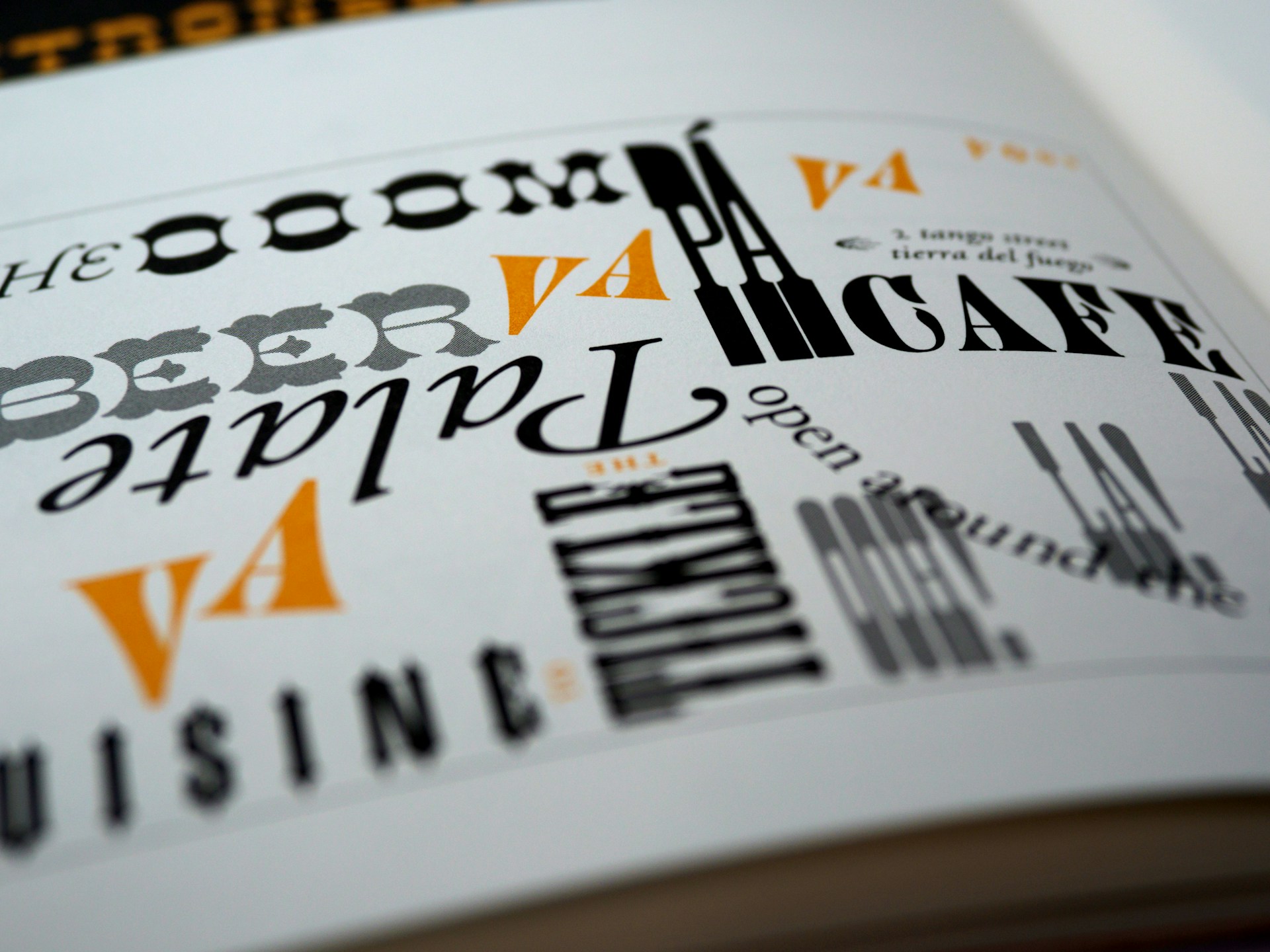
Typography as Visual Art: The Power of Letterforms in Visual Communication
Typography is more than the arrangement of letters to convey words. It is a visual art form that shapes how language is seen, interpreted, and experienced. In graphic design, typography transforms written communication into visual expression, combining aesthetics and function to create meaning beyond literal text. Every typeface, spacing decision, and layout contributes to the emotional tone, clarity, and effectiveness of communication (Lupton, 2010).
Typography operates at the intersection of art and design. It communicates information while simultaneously serving as a powerful visual element capable of expressing identity, mood, and structure (Ambrose & Harris, 2011). For visual graphic designers, typography is not merely a technical skill but a core artistic discipline.
Typography as Both Language and Image
Typography occupies a unique position among visual elements because it functions both as language and image. Letterforms convey semantic meaning through words, but their visual form also communicates emotional and aesthetic meaning (Bringhurst, 2013).
The shape, weight, proportion, and spacing of letters influence perception. For example:
- Serif typefaces often convey tradition, authority, and reliability
- Sans-serif typefaces suggest modernity, clarity, and simplicity
- Script typefaces evoke elegance, personality, and creativity
These visual characteristics affect how viewers interpret messages before they consciously read the words (Ware, 2013).
Typography therefore communicates on two levels:
- Verbal communication (what the text says)
- Visual communication (how the text appears)
This dual function makes typography one of the most powerful tools in visual design.
The Anatomy of Letterforms as Artistic Structure
Letterforms are carefully constructed visual structures. Each typeface consists of precise relationships between lines, curves, and proportions (Samara, 2007).
Key anatomical components of typography include:
- Baseline – the invisible line upon which letters rest
- X-height – the height of lowercase letters
- Ascenders and descenders – vertical extensions above and below the main letter body
- Stroke weight – thickness of letter lines
- Counter – the enclosed or open spaces within letters
These structural elements influence readability, visual rhythm, and aesthetic harmony (Bringhurst, 2013).
Type designers carefully balance these elements to achieve clarity, beauty, and functional efficiency.
Typography, like drawing, relies on proportion, balance, and spatial relationships.
Typography and Visual Hierarchy
Typography plays a critical role in establishing visual hierarchy, which guides the viewer’s attention through a design. Hierarchy determines which information is seen first, second, and third (Lupton, 2010).
Designers create hierarchy using typographic variables such as:
- Size
- Weight (boldness)
- Style (italic, regular, bold)
- Spacing
- Alignment
- Color
These variations allow typography to organize information clearly and effectively (Lidwell et al., 2010).
Without typographic hierarchy, visual communication becomes confusing and difficult to navigate.
Typography provides structure to visual information.
Typography as Emotional Expression
Typography communicates emotion visually. Even without reading the words, viewers can sense tone through typographic style (Ambrose & Harris, 2011).
For example:
- Bold, heavy typography conveys strength and authority
- Thin, delicate typography conveys elegance and fragility
- Irregular typography conveys playfulness or instability
Typography influences mood in the same way color, line, and form do.
This expressive quality makes typography an artistic medium capable of emotional storytelling.
Designers often select typefaces specifically to match the emotional intent of a message.
Typography and Space: The Art of Arrangement
Typography is not only about letters but also about space. The arrangement of letters and words in space determines readability and visual harmony (Samara, 2007).
Important spatial considerations include:
- Kerning – spacing between individual letters
- Tracking – spacing across groups of letters
- Leading – vertical spacing between lines of text
Proper spacing improves readability and creates visual rhythm (Bringhurst, 2013).
White space around text enhances clarity and elegance.
Typography transforms empty space into an active design element.
Typography in Identity and Branding
Typography plays a central role in visual identity. Many brands are recognized primarily through their typographic style (Lupton, 2010).
Typography communicates brand personality, such as:
- Professional
- Modern
- Traditional
- Friendly
- Technical
Consistent typographic usage strengthens recognition and brand coherence.
For example, corporate logos, websites, and advertisements rely heavily on typography to communicate identity.
Typography becomes a visual signature.
Typography as Pure Visual Art
In some forms of design, typography becomes the primary visual subject rather than simply a carrier of text.
Typographic art includes:
- Poster design
- Logo design
- Experimental typography
- Calligraphy
- Motion typography
In these forms, letterforms function as shapes, patterns, and compositions (Meggs & Purvis, 2016).
Typography becomes both message and image.
This artistic dimension demonstrates that typography is not merely functional but expressive.
Typography and Human Perception
Typography is deeply connected to human perception and cognition. Readability depends on how the human visual system processes shapes, contrast, and patterns (Ware, 2013).
Designers must consider:
- Legibility (recognition of individual letters)
- Readability (ease of reading text blocks)
- Visual fatigue
- Contrast and accessibility
Effective typography reduces cognitive effort and improves communication efficiency (Lidwell et al., 2010).
Poor typography increases confusion and reduces comprehension.
Typography directly affects user experience.
The Role of Typography in Modern Digital Design
In digital environments, typography is essential for user interfaces, websites, and mobile applications. It guides interaction, communicates information, and enhances usability (Norman, 2013).
Typography supports:
- Navigation clarity
- Interface usability
- Information hierarchy
- Accessibility
Digital typography must balance artistic expression with functional clarity.
Designers must ensure typography works across different devices, screen sizes, and viewing conditions.
Typography is central to digital communication.
Conclusion
Typography is both visual art and functional communication. It transforms language into visual form, combining aesthetics, structure, and meaning.
Typography expresses emotion, establishes hierarchy, creates identity, and enhances readability. It shapes how viewers perceive and interpret information.
For visual graphic designers, typography is not simply about choosing fonts. It is about sculpting visual language.
Typography is the art of giving visible form to words.
It is where language becomes image, and communication becomes visual art.
References
Ambrose, G., & Harris, P. (2011). The fundamentals of graphic design (2nd ed.). Bloomsbury Publishing.
Bringhurst, R. (2013). The elements of typographic style (4th ed.). Hartley & Marks.
Lidwell, W., Holden, K., & Butler, J. (2010). Universal principles of design (Rev. ed.). Rockport Publishers.
Lupton, E. (2010). Thinking with type: A critical guide for designers, writers, editors, and students (2nd ed.). Princeton Architectural Press.
Meggs, P. B., & Purvis, A. W. (2016). Meggs’ history of graphic design (6th ed.). Wiley.
Norman, D. A. (2013). The design of everyday things (Revised and expanded ed.). Basic Books.
Samara, T. (2007). Design elements: Typography fundamentals. Rockport Publishers.
Ware, C. (2013). Information visualization: Perception for design (3rd ed.). Morgan Kaufmann.

Related Posts

This Post Has 0 Comments